
The Run’s Paul Raschid on Bandersnatch, Interactive Movies and Glorious Northern Italy
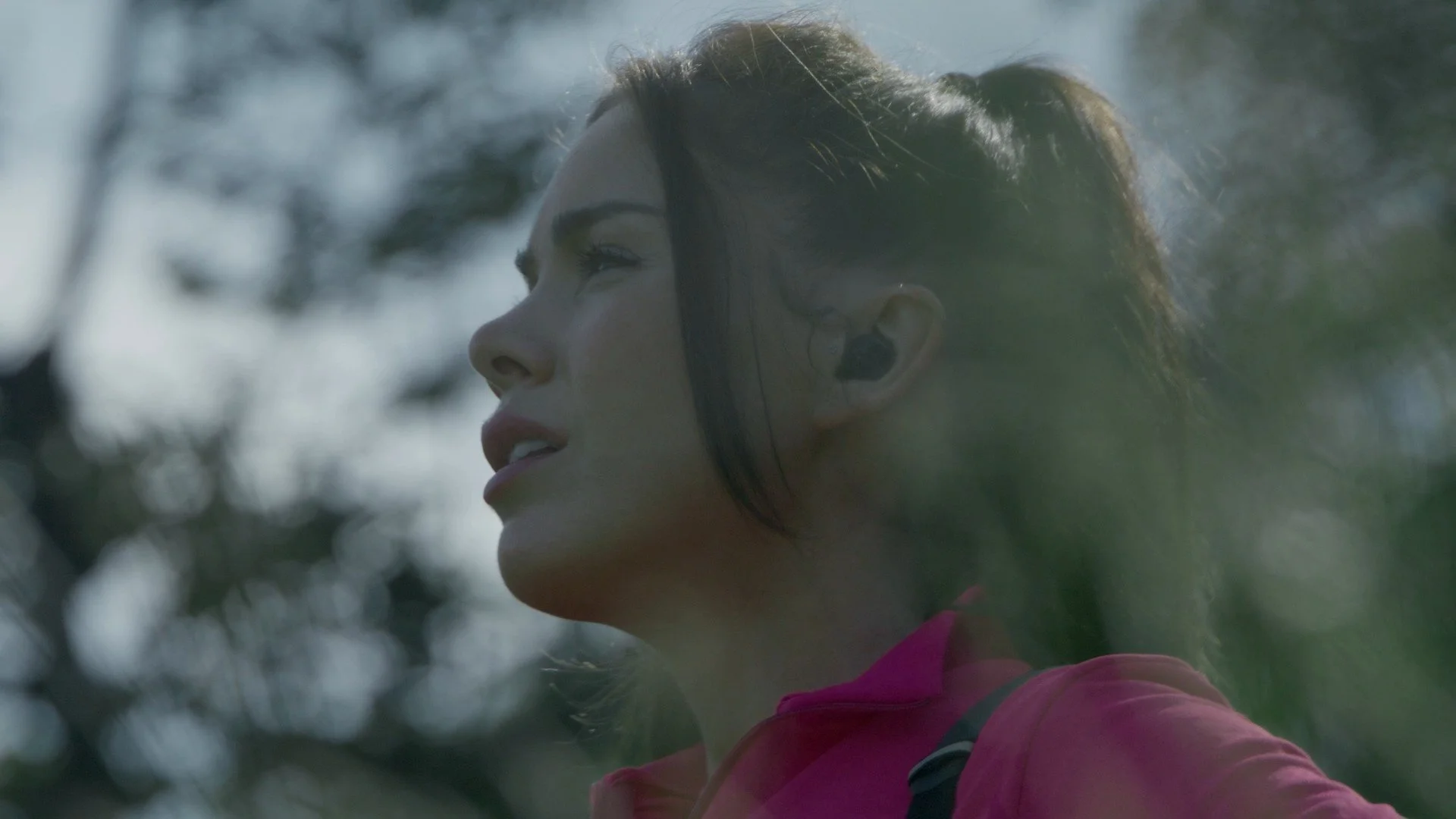
Having written and directed two 'conventional' movies and written another, filmmaker Paul Raschid branched out into the interactive genre following the success of Netflix's Bandersnatch in 2018. The Run is his sixth such production.
WARNING: I've done my best to avoid spoilers, but it's impossible to discuss The Run without revealing some plot details. If you want to go into the game totally cold, I recommend coming back and reading this interview after you've completed The Run at least once.
Hi Paul! Before we get started on The Run, could you introduce yourself to readers?
Absolutely. I'm Paul Raschid, and I'm a writer-director working in the film and games industry. I started out making traditional linear films back in 2015, then at the end of 2018, Bandersnatch put interactive films on the map. Incidentally, in January 2019, I was approached by a producer about making an FMV game with a similar premise to my film White Chamber. They thought I'd be a good fit, and because I've been a casual gamer all my life – and am interested in non-linear storytelling – it wasn't too much of a stretch to learn the new language of branching narrative.
That was The Complex?
Yes, in 2020. From then on, I found myself in that niche, before pivoting back to linear feature film directing last year.
You mentioned you're a gamer – any favourites?
I'm actually more of an RPG player, though I'm very much a triple-A game consumer. I've owned every PlayStation since the first, so it's always been something in the background and an influence.
You obviously like a bit of horror, too…
I love horror movies, and that's definitely a genre I'm very much involved in. My first film was a supernatural horror called Winterstoke House, and White Chamber has horror elements, too. I especially love slasher films, from your Seventies and Eighties classics like Halloween and A Nightmare On Elm Street to one of my favourite films, Scream. It's just extremely clever, the kills are interesting, as is the meta element.
The slasher genre certainly has a part to play in The Run – but in general, what's the difference between making conventional and interactive movies?
So, I think the biggest difference when you start is the way you structure things. You want to set out on a feature film with as complete a script as possible, but you can still chop and change things, delete scenes, move things around and so on, in the edit. Whereas with an interactive movie, because you have all these branches that are so interconnected, you have very little latitude in that sense. You can't just change the order of things or remove a branch, because it could have a knock-on effect. So when you lock your script in preproduction and into shooting, you really have to lock your script.
That must make for a tense period during preproduction!
It's actually kind of freeing in many ways because you know you're working towards a distinct target, know what you're shooting and can focus on making it the best it can be.
How do you map it all out?
I map the whole thing out as a flowchart first, branching scene after scene until there's a whole loop written, a whole map, lock that and turn it into a screenplay so the actors can learn the dialogue and stage directions.
It sounds very rigid. A lot of typical movies are still being written during shooting!
Oh yeah. We're in awards season now, and I think it's well documented that during filming One Battle After Another, they were writing as they were going. They also have reshoots and pick-ups [smaller, less intrusive reshoots] – we never have that flexibility. It would be a nightmare, and it is, unpicking the flowchart and moving things around.
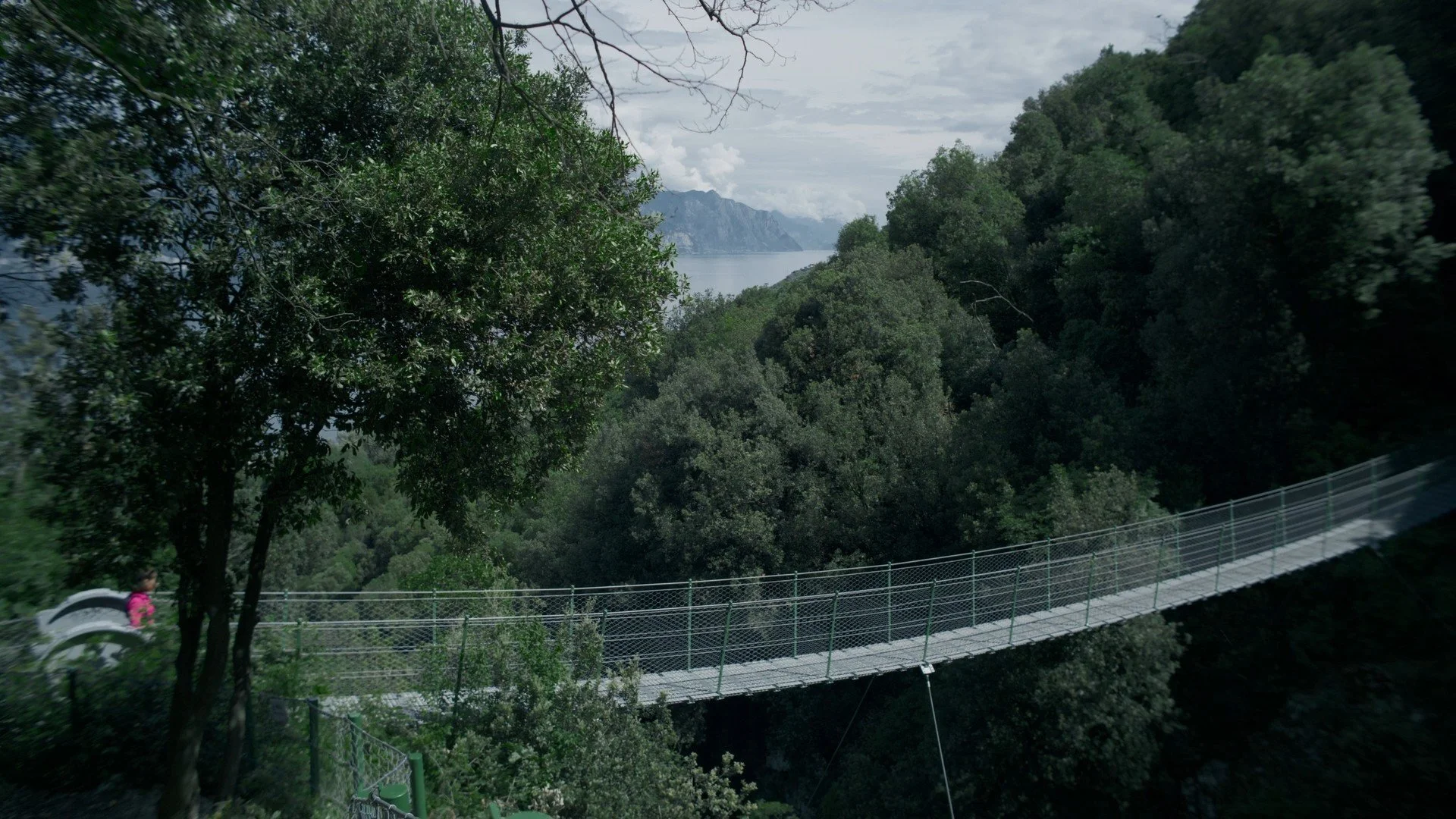
The first thing that struck me about The Run was the beautiful scenery. Why set it in Northern Italy?
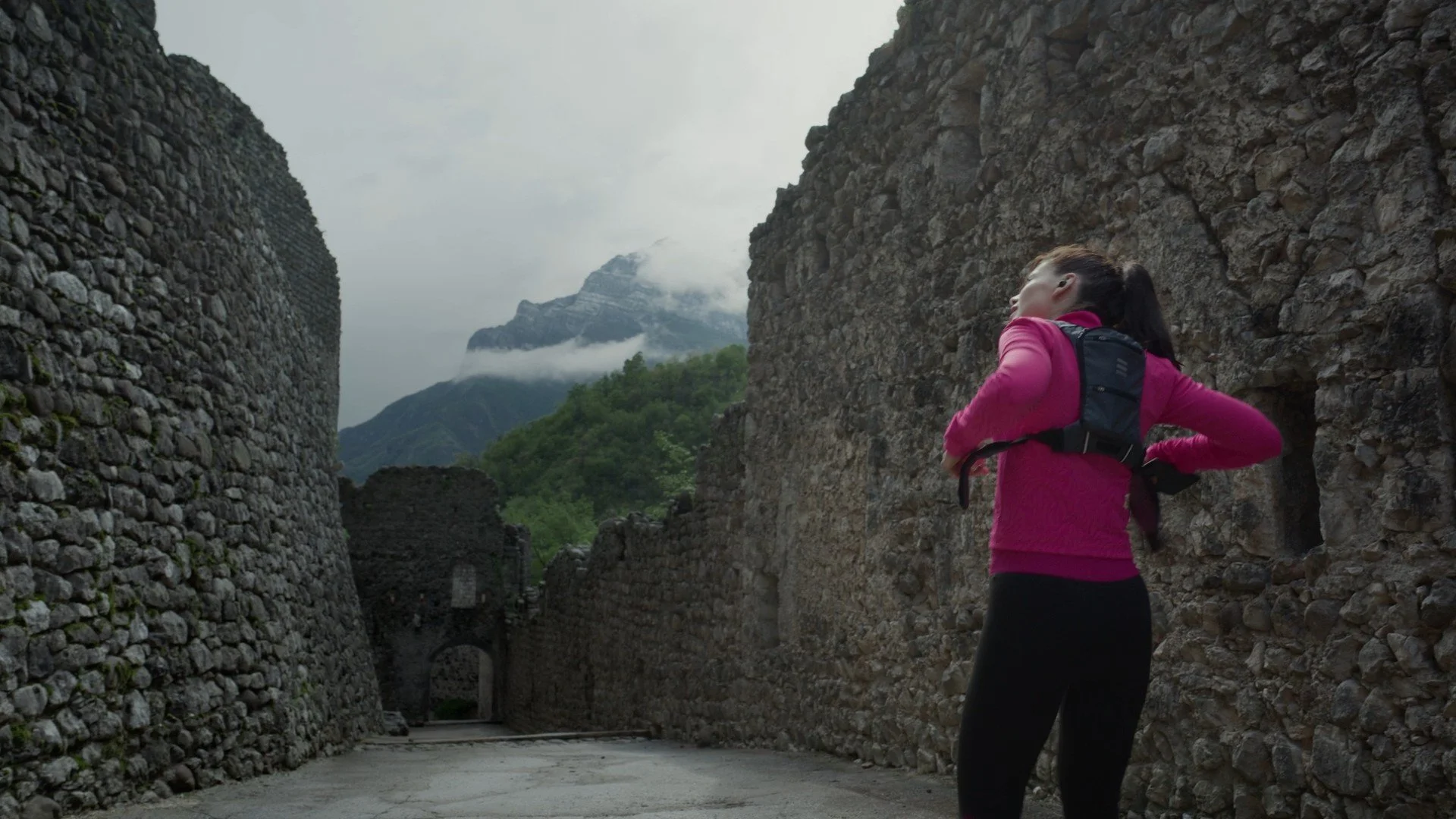
It was an opportunity because I started working with this new production company, Benacus Entertainment, Seth Michaels and Sara Sometti Michaels. They were a new production company based out of America, but also wanted to make films in Italy because Sara is from the Veneto region of Northern Italy [where The Run was filmed]. When I pitched them the Run, the location was ambiguous – it could have been the Highlands of Scotland or the Carpathian Mountains – but they loved the idea, and felt it could suit the mountains of Northern Italy. And, obviously, thematically – spoiler alert – it fits with the religious element of things that felt very grounded in Italian culture, too. So it was creativity meeting practicality and convenience. And, of course, it helped getting Franco [Nero] and Dario [Argento] for the cast. Franco is just an amazing actor.
Talking of actors, what was it like working with Roxanne McKee? It's quite a physical role, and presumably different from conventional acting with its alternate branching.
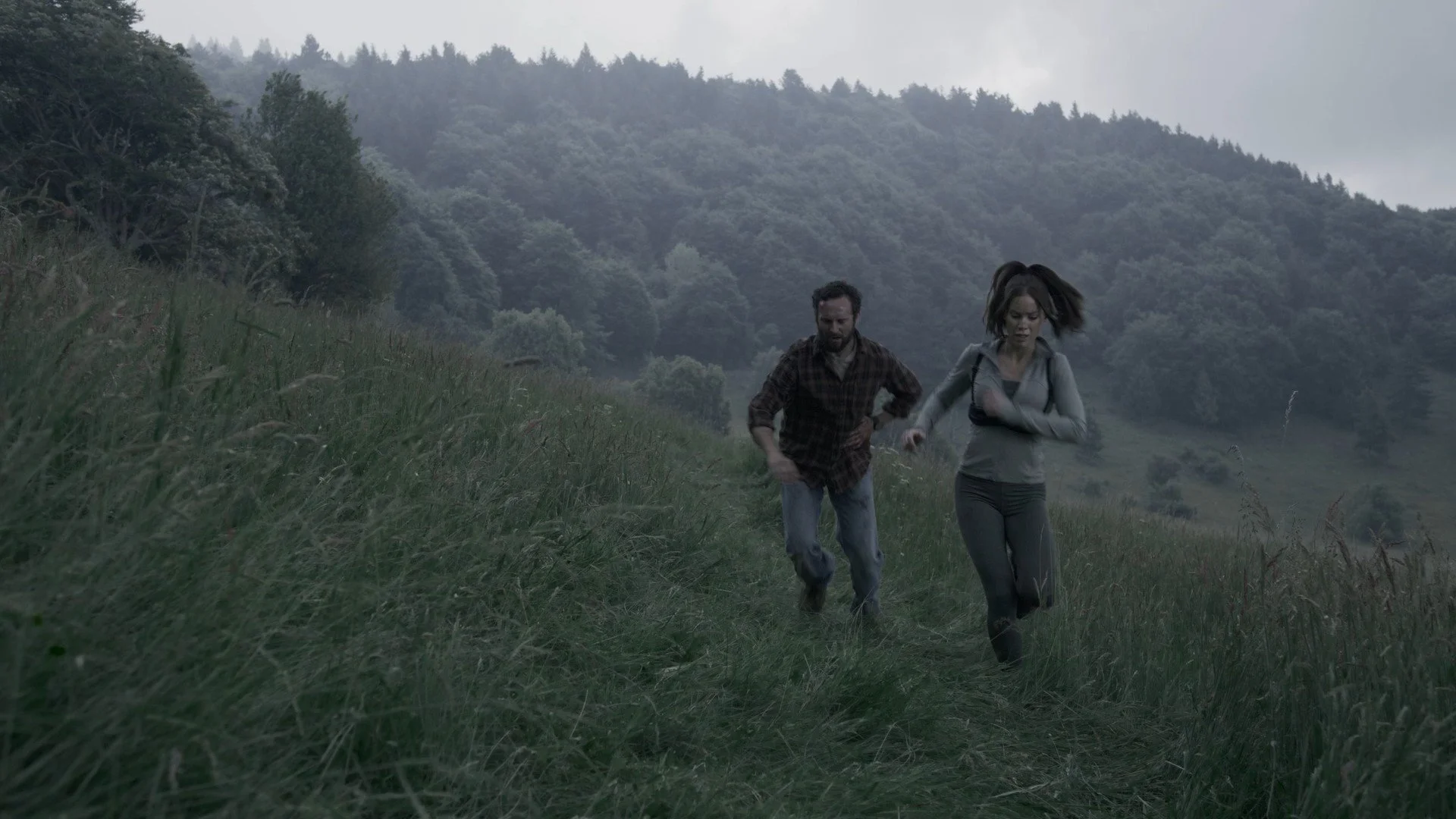
From the beginning, we knew we needed someone who was not only an incredible actor, because they're in every scene and obviously the branching narrative stuff, but also because the story goes in different emotional directions. When I'm casting for an interactive, it's really important to find someone who's used to dealing with dense text, and usually a stage background helps. But with The Run, we had this extra layer of physicality. We needed someone who was an active gym goer, or ideally a runner, which Roxanne was. And it wasn't just the running side of things; there was also the stunt element. Roxanne ticked all the boxes.
I also love the character of Matteo – played by George Blagden – and that you're never quite sure of him, until the end.
It's one of the principles of the slasher film that everyone's a suspect, and you don't know who to trust. Matteo is established as a very gentle character, seemingly harmless, but we thought about where we could sow those ambiguous seeds about exactly who he is through a reaction to something or a line delivery that's not quite how you'd expect it to be. I think George found those nuances because he's such a fantastic actor, and it's interesting because Matteo is a companion, a help, and a guide, but also a suspect. Is he in on it? Of course, in the end, he's on the same journey as Zanna-
Ahem, anyway… I love Matteo's grandma too, out running in the mountains at 85!
In that area of Italy, there are many blue zones where everyone lives to 90 or more because the way of life there is so healthy. It wasn't far from the reality in the areas where we were shooting.
Zanna is an influencer. Can you tell me about how this informed her character?
A modern-day influencer [character] is something I wanted to explore. When you think about influencers, a lot of them want to say things that are outrageous to get them clicks. It's almost like the economy is, the nastier you are, the more engagement you're going to get, like a critic savaging a film and giving it one star, which gets more engagement than a balanced three or four-star review. So with Zanna, there's that element of extremity if you go for some of the more ruthless choices. But when you delve into the character, there are a lot of wounds there as well. I wanted it to play out as if everything she's saying is something she believes, as you would as an influencer, or is it a product of the very solitary life she's clearly led to get these five million followers? At the end of the day, it's a paradox: she's running on her own in the mountains, but with five million followers. But is she really lonely deep down?
The choices are generally quite diverse, too.
It's an interesting thing in FMV games in that you want to have really polarised choices that are complete binary opposites. Otherwise, if you keep them quite centred, gamers sometimes feel they aren't that different. Whereas, if you can make her a dramatically different person, or make the choices between life or death, that's where you tend to do the best in terms of people replaying it and having markedly different experiences, creating different characters and character arcs.
Do you think there's a strong social aspect to playing interactive games such as The Run?
Yeah, massively, and funnily enough, when it's a group of people, they tend to be much harsher – they want to see what would happen if you did the nasty thing! It's not just that you're interacting with the film, you're also interacting with the people that you're with. I think when you're on your own, like you said, it's more 'I want to get to the end without dying, and have the best ending'. Whereas in a group, there's a lot more brazenness, 'let's see what happens' thing going on.
Many of the choices in The Run are potentially lethal – did you try to give clues as to the consequences of what you're about to do?
Totally. In terms of design, I feel you always want to avoid, as much as possible, the 50/50 coin-toss type of decision. You want some breadcrumbs to guide the audience's logic. It could be that you're playing the South Trail first and didn't know, so you're really making a 50/50 choice – but then you can at least make the link by playing the North Trail and seeing the other side. I always try to put something, some hint, whether it's linear or non-linear, in there, to inform the audience's choices as much as possible.
On that note, I loved the Rashomon aspect of The Run, with the same story told from different perspectives. I can't imagine how difficult it is to weave all that together, so well done on that!
[Laughs] Thank you.
What's up next for you, Paul?
I've just shot a linear feature, my first in seven years or so, and we're currently in post-production for that. It's called White Tide, and we shot it in southern Italy, which was a wonderful experience. It's a dark comedy-crime thriller, and I'm really looking forward to completing it. I'm very fortunate to have been on back-to-back projects since the pandemic, sometimes two going at the same time. So, it's nice to reach a point where you feel like 'Okay, maybe I'm entering a new phase of my career', and seeing what the next step is.
My thanks to Paul for his time, and to Mark at Mark Allen PR for arranging the interview. You can check out more of Paul’s work on his website, https://www.paulraschid.com/.