Mole
Developer: Off Black Creations
Publisher: Oro Interactive
Platforms: PC (reviewed)
Release Date: Out now
A new trend has recently emerged in the indie horror field. We first noticed it in our preview of Below, Rusted Gods, and while it’s undoubtedly been around longer than Indie Horror Gamer, this retro-futuristic Seventies/Eighties aesthetic has a unique, satisfying appeal. Think Tom Baker-era Doctor Who, mixed with a bit of Lovecraft and fear-mongering shows such as Doomwatch, and you’re almost there. Oh, and don’t forget the grainy, VHS visuals.
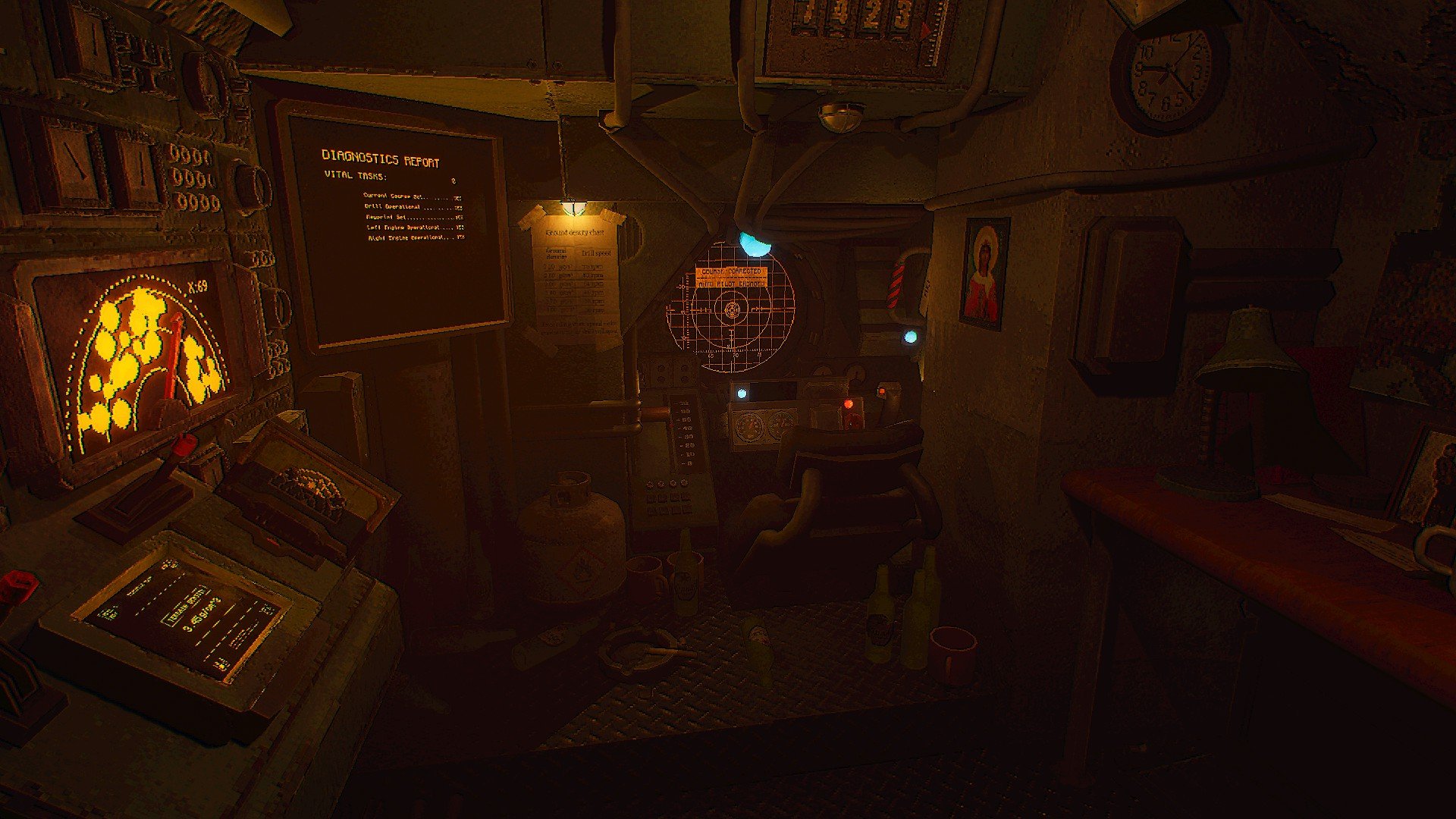
Mole is the (videogame) debut of Off Black Creations, a Swedish developer previously known for a minimalistic survival board game, CXIN. The player is Viktor Kaminskyi, pilot of the eponymous craft, tunnelling deep underground in search of a mysterious ‘White Rabbit’ signal that’s causing severe disruption on the surface. As we join Viktor, things have gone very wrong: the craft’s off course, the power’s down, and there’s a dead body in the rec room.
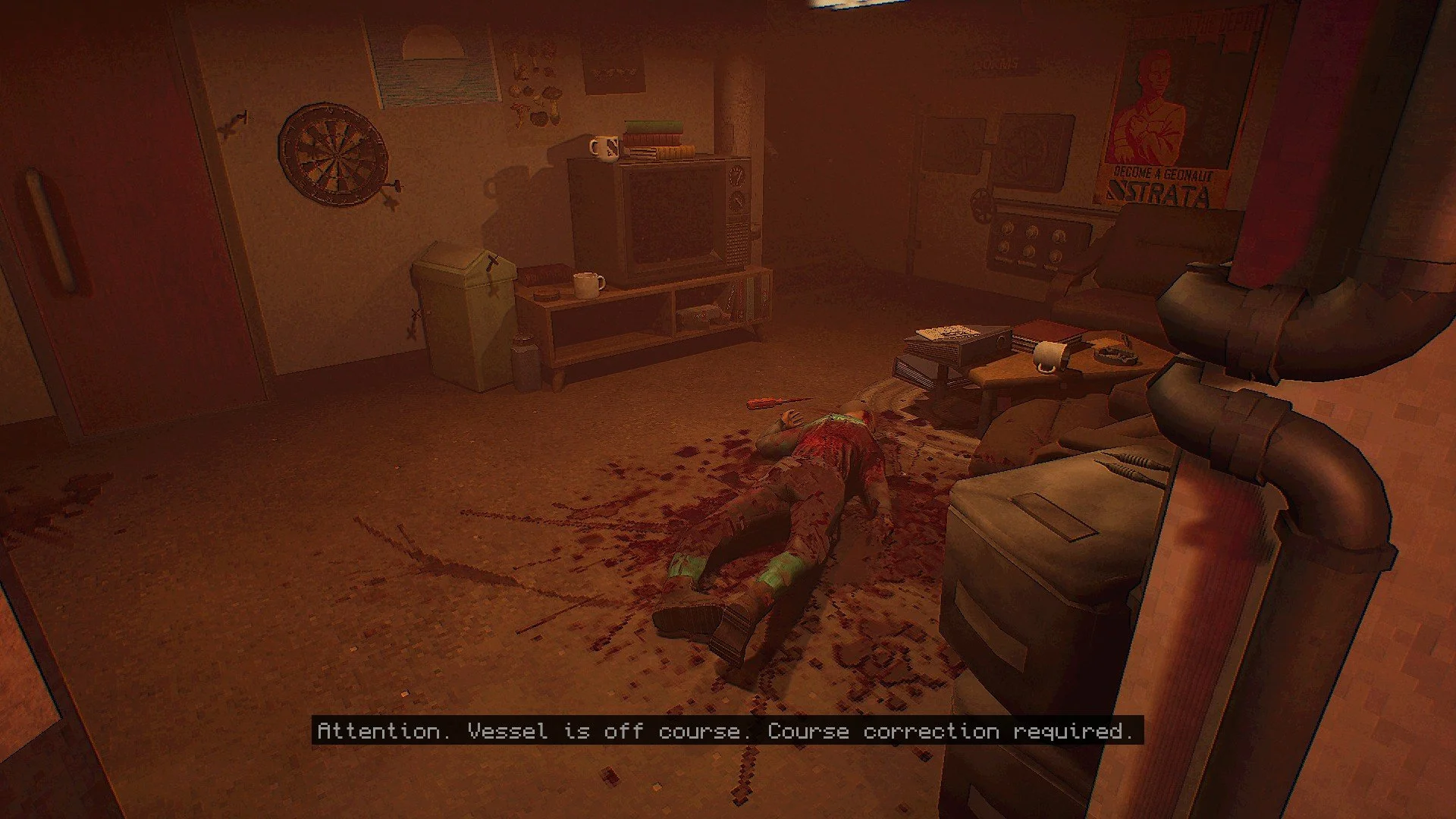
Viktor’s first task is to get the mission back on track by completing a series of process-focused tasks, most of which are well balanced, treading a line between accessibility and challenge. As the pilot continues his descent, both physically and psychologically, he’s plagued by dreams and visions of his dead son, a calamity revealed throughout the game, up until a startling revelation at its conclusion.
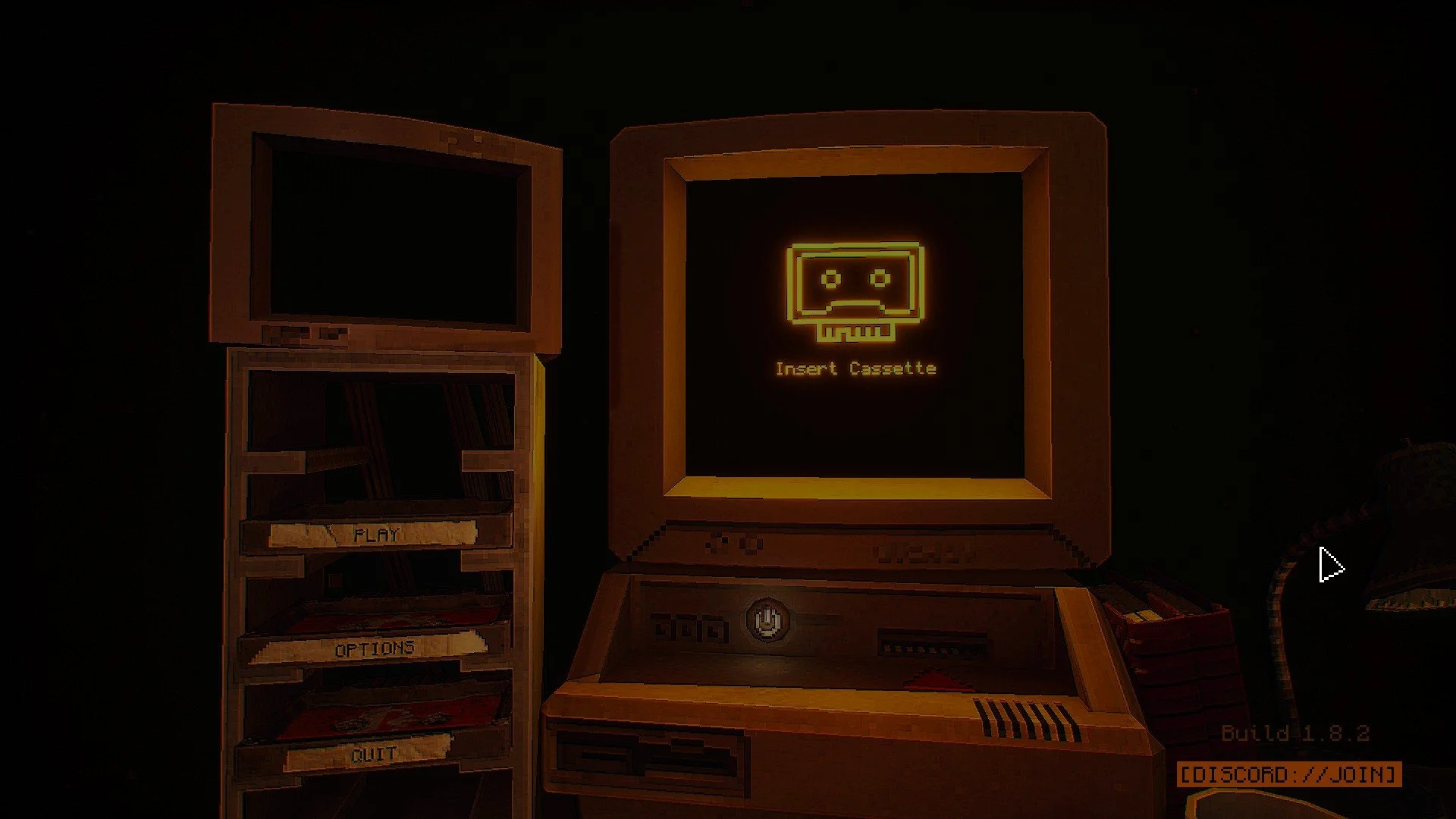
Mole is a fantastic experience. The loneliness of the deep drilling operation is perfectly portrayed, with subtle clues as to what’s really happening dotted throughout the rusting machine. On that note, the Mole’s a character in itself, all creaking, ship-like doors, tight corridors and large computers. Viktor manipulates the latter using a series of clunky cassettes, and while this process is initially confusing, it soon becomes second nature, and indeed, vital to the plot of the game. It’s even adapted for the game’s menu screen, which is a lovely touch.
Ultimately, Mole is a walking simulator, albeit one with impressive thought behind both its construction and story. There’s no combat, and if it has any weak points at all, it’s the game’s monster, which feels a little tacked-on, at least until the game’s end, and a chase sequence that treads a fine line between exciting and frustrating. Yet, like all the best horrors, Mole asks as many questions as it answers, leaving the player to look back and re-interpret many of its themes and events. If you’re a fan of psychological horror games such as Iron Lung, you’re unlikely to be bored by Mole.
CONCLUSION
A beautifully constructed game, the conclusion of which will leave you thinking about its themes of loss and loneliness for some time.